Skip to Main Content
Chicano Studies Research Center

Chancellor’s Postdoctoral Fellows

Over the course of four years starting in 2022-23, the UCLA Chicano Studies Research Center (CSRC) administered the selection of a total of twenty UCLA Chancellor’s Postdoctoral Fellows with appointments of up to two years. These appointments were supported by the UCLA Hispanic Serving Institution Infrastructure Initiative and UC Chancellor’s Postdoctoral Fellowship Program (CPFP). These Chancellor’s Postdoctoral Fellows were mentored by tenured faculty representing departments across north and south campus, including: art history; chemistry and biochemistry; Chicana/o and Central American studies; civil and environmental engineering; classics; communication; ecology and evolutionary biology; earth, planetary, and space sciences; history; the Institute for Research on Labor and Employment (IRLE); neurosurgery; psychology; psychiatry; and social welfare. The Institute of American Cultures (IAC) supported the professional development of the postdoctoral fellows affiliated with the IAC centers by offering professional development workshops and presentations by UCLA faculty.

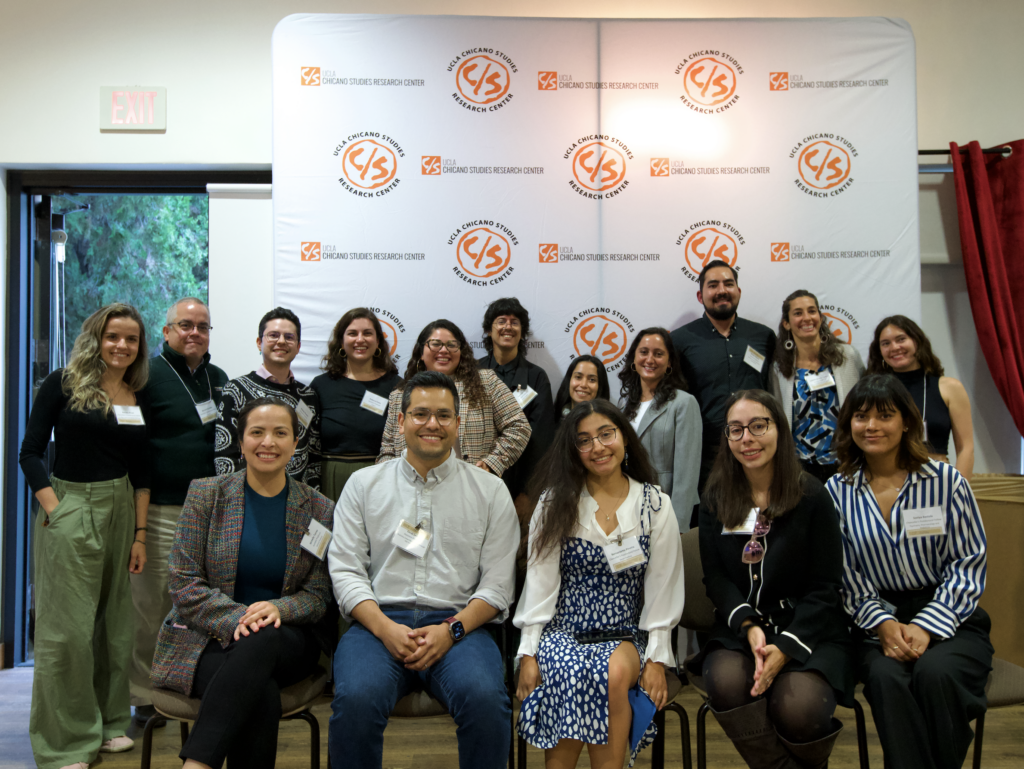
Sixteen UCLA Chancellor's Postdoctoral Fellows and new faculty posing together at a CSRC event in fall 2024, with a CSRC backdrop behind them.

UCLA Chancellor’s Postdoctoral Fellows and New Faculty, Fall 2024 (CSRC/Paul Connor)

The fourth cohort of fellows (2025-26) are:

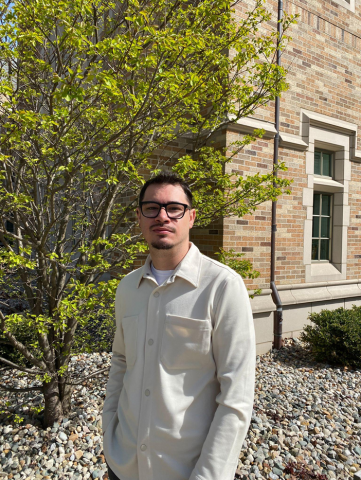
Roger Sargent Cadena, Jr. standing outdoors in front of a brick campus building and a leafy tree.

Roger Sargent Cadena, Jr., PhD


Roger S. Cadena Jr. earned his PhD in sociology at the University of Notre Dame where he was an American Sociological Association Minority Fellowship Program Fellow. Roger’s interview-based dissertation focuses on how everyday US Latinos of different partisan backgrounds use ideologies to construct, connect, and contest social and political identities. He has published peer-reviewed research on Latino conservatism and Republicanism in Ethnic and Racial Studies (forthcoming) and Sociology of Race and Ethnicity. Roger has also published research on W.E.B. Du Bois, racial ideologies, and school curricula in Sociology Compass. Cadena grew up in Chicago and, before attending Notre Dame, was a high school social studies teacher in Chicago public schools. He will be mentored by Efrén Pérez, professor in the Department of Political Science and the Department of Psychology. Cadena’s fellowship appointment will be in the Department of Political Science.
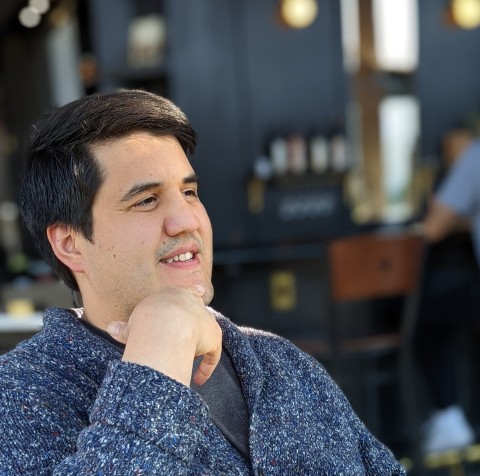
Emilio Cárdenas smiling with his hand under his chin indoors, against a blurred background.

Emilio Cárdenas, PhD


Emilio Leal Cárdenas was born and raised in Fresno, California. He earned his bachelor’s degree in chemistry from California State University, Fresno. In 2014, he pursued doctoral studies at Purdue University under the supervision of Prof. Arun K. Ghosh. His doctoral studies focused on the design and synthesis of potent and selective aspartic acid protease inhibitors as potential treatments for Alzheimer’s disease, Type-2 Diabetes, and HIV. In 2019, he started postdoctoral studies at the University of Michigan under the supervision of Professor Amanda L. Garner. His postdoctoral work focused on the design and synthesis of m7GMP-derived cap-binding inhibitors of eIF4E as a potential treatment for cancer. In 2025, he joined the group of Professor Osvaldo Gutierrez to work on the development of multicomponent iron-catalyzed radical cross-coupling reactions. Cárdenas will be mentored by Osvaldo Gutierrez, professor in the Department of Chemistry and Biochemistry.

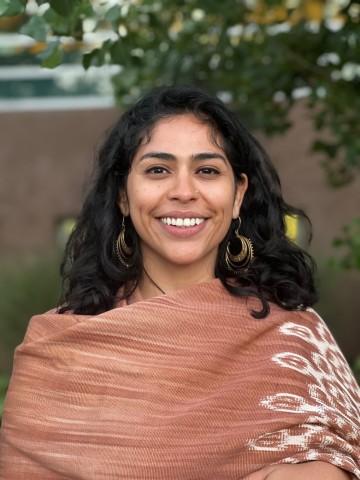
Diana Gamez smiling outdoors, wearing gold hoop earrings and a salmon colored top, with greenery behind her.

Diana Gamez, PhD


Diana Gamez received her PhD in anthropology from UC Irvine in 2025. Her research interests include historical and contemporary Guatemala and its diasporas, women’s collective organizing, gender and sexuality, archives of state violence, and communal archives. Gamez’s dissertation unveils the stories of radical women in Guatemala who collectively organize against violence and attempt to affirm life across different historical and current contexts. As a UCLA Chancellor’s Postdoctoral Fellow, Gamez will build on her existing work to investigate the stories of radical women in diaspora. She will be mentored by Leisy J. Abrego, professor in the Department of Chicana/o and Central American Studies.

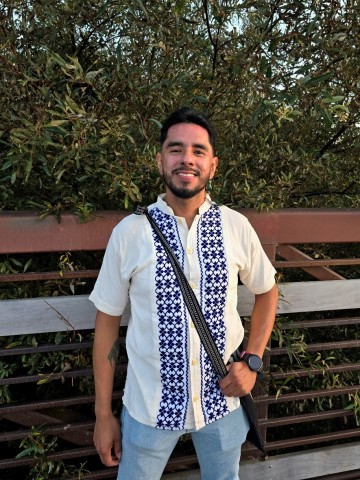
Mario Gómez Zamora smiling outdoors in a white shirt with blue embroidery, standing in front of trees and a wooden fence.

Mario Gómez Zamora, PhD


Mario Gómez Zamora is a scholar of queerness, gender and sexuality, migration, memory, Latinx studies, dance studies, Indigenous performances, and P’urhépecha studies. He earned his PhD and MA at UC Santa Cruz in Latin American and Latino studies with an emphasis in anthropology. He holds a master’s in teaching history from Universidad Michoacana de San Nicolás de Hidalgo, and a BA in secondary education with a concentration in history from Normal Superior Juana de Asbaje in Michoacán. Gómez Zamora is a first-generation P’urhépecha and mestizo scholar (the son of a mestiza mother and a P’urhépecha father) originally from Tangancícuaro, Michoacán, where he was raised by his grandparents, aunts, and sister. For over a decade, he has collaborated with P’urhépecha youth and elders in the recollection of oral histories in his community of origin, which culminated in the multilingual publication Entre el Recuerdo y la Memoria: Historias de Patamban. As a UCLA Chancellor’s Postdoctoral Fellow, he will work on his book project “Queer P’urhépecha Histories and Performances Beyond Borders,” in which he explores the cultural tensions that queer Indigenous P’urhépechas face when participating in their communities’ traditions and ceremonies in both sites of the border. Gómez Zamora will receive mentorship from Professor Jason De León in the Department of Anthropology, who will help Mario to analyze systemic issues related to the murder and migration of queer P’urhépechas.

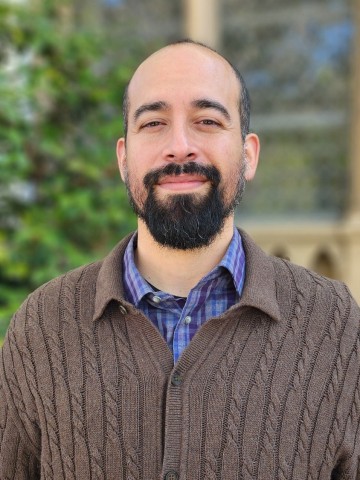
Isidro González Granados smiling outdoors in a brown sweater with greenery in the background.

Isidro González Granados, PhD


Isidro González Granados held a Post-Doctoral Fellowship in History at Claremont McKenna College. He earned his PhD at UC Santa Bárbara. His research explores histories and legacies of eugenic practices, methods, and data in the 20th-century U.S. Southwest. Specifically, he looks at the roles of social workers, science, and the state in race-making through disability, disabled subjects, and disability experts at sites of confinement and exclusion, such as institutions for people deemed “feebleminded” and the Mexico-U.S. border. One of his current projects delves into the history of behavioral interventions and how racialized subjects experienced them in the post-World War II era. In support of his work, he received the Andrew Vincent White and Florence Wales White Scholarship in the Medical Humanities from the University of California Humanities Research Institute (UCHRI) for a project that showed how intimate dialogue between observer and observed demonstrated ways in which bedside manner, cultural insensitivity, and an ideology that some bodyminds are worth more than others led to long lives of confinement, surveillance, and sexual sterilization for patients/inmates or, for eugenic professionals, to successful, generative, and long careers in the sciences. His work has appeared in Southern California Quarterly and Sage Research Methods: Diversifying and Decolonizing Research. González Granados will be mentored by Alexandra Minna Stern, Dean of the College of Humanities and professor in the Department of English, History, and Institute for Society and Genetics. González Granados’ fellowship appointment will be in the Department of History.

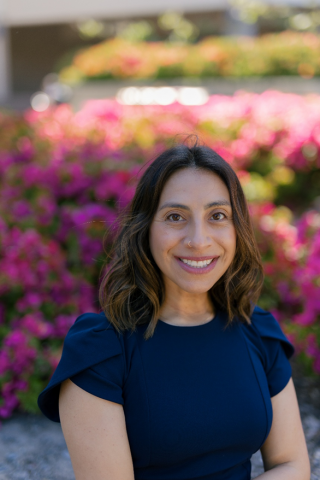
Nancy Molina-Rogers smiling outdoors in a navy blue top, with shoulder-length dark hair, and with bright pink and purple flowers blurred behind her.

Nancy Molina-Rogers, PhD


Nancy Molina-Rogers earned both her doctoral and master’s degrees in communication from the UC Santa Barbara. Her research focuses on the relationship between social media and collective action among marginalized groups, with a particular emphasis on racial and ethnic identity. In her dissertation, she explored how advantaged and disadvantaged groups differ in their perceptions of social media as a tool for group-empowering online activities, such as collective action. As a UCLA Chancellor’s Postdoctoral Fellow, Molina-Rogers will build on this foundation by examining media literacy and political participation within the Latine community. Her work will specifically focus on how news consumption on social media platforms shapes these dynamics. Her fellowship appointment will be in the Department of Communication, under the mentorship of Professor Stuart Soroka.

Past Cohorts